

游戏详情
玩法说明
因为父母工作繁忙,所以只能暂住堂姐家的主人公。在这里可以体验各种有趣的日常活动,只要你撒撒娇,就可以享受大姐姐和阿姨全心全意的关爱。
那么赶紧去度过一个难忘的夏天吧~
踏入充满回忆的乡间小屋,体验这款销量突破4万+的传奇SLG游戏。在炎热的夏日里,与堂姐一家度过最难忘的假期时光,感受庭院式像素风格的精美画面、丰富多样的互动玩法,以及那些温馨美好的甜蜜时刻。每一个场景都精心雕琢,每一个角色都栩栩如生,带给你前所未有的沉浸式游戏体验。
操作攻略
攻略指南
时间系统
- 本游戏中每天分为上午、下午、傍晚、夜晚、深夜五个时段(除深夜时段外均可外出)。
- 游戏内不是实时时间,行动点数使用完之前不会被动切换时段。
- 某些事件触发后会强制跳跃至下一个或更以后的时段。
- 玩家可以和角色对话一起度过本时段,也可以点击时间栏主动跳过时段。
- 每周末发生全家出门旅行事件,占用至傍晚时段。
行动点数
- 大多数行为(对话、撒娇、钓鱼等)都需要消耗一点行动点数。
- 使用道具可以恢复行动点数,每一时段切换后恢复行动点数至最大值。
- 爬山(山)、偷看美女(海边)消耗本时段所有行动点数,触发后强制切换到下一时段。
- 随着游戏进程和技能学习,行动点数最大值可以增加。
技能系统
- 撒娇技能:学习以解锁对话中撒娇界面选项。
- 被动技能:学习以解锁对应的限制或打开功能。
- 特殊技能:为玩家提供额外道具、金钱、数值增长的技能,需要支付对应点数。
- 全技能表
数值系统
欲望值
- 可以通过道具和撒娇获取欲望值。
- 可以通过技能提高最大值。
体力值
- 可以通过道具、睡觉、洗澡恢复体力值。
- 钓鱼、体育特训等消耗较少的体力值。
- 爬山、偷看美女消耗较多的体力值。
- 可以通过技能提高最大值。
回忆值
- 可以通过触发各种事件获得回忆值,作业完成度超过上限部分将转化为回忆值。
- 回忆值用于学习技能。
好感度
- 通过和角色一起度过时间、赠送礼物获得好感度。
- 好感度每达到20、40、60、80、100时达到好感度上限,达到好感度上限是解锁各好感度事件的条件之一。
- 3位主角与5位配角有好感值。
作业完成度
- 针对不同女主角设计不同的作业项目,作业完成度达到100是解锁各好感度事件的条件之一。
- 作业完成度超过上限部分将转化为回忆值。
- 美雪通过洗餐具小游戏获得作业完成度。
- 莉音通过课外研究(捕获新虫或鱼后可以进行研究)获得作业完成度。
- 结衣通过算术题小游戏获得作业完成度。
收集系统
- 在河边、山的树上涂抹虫胶,第二天可以获得数量1~3个虫(数量与技能学习有关)。虫稀有度包括1~4,可用于课外研究或出售。
- 在河边、海边垂钓点钓鱼,可以获得1个鱼(难易度技能学习有关)。鱼稀有度包括1~4,可用于课外研究或出售。
- 在粗点心店可消耗100元获取一个扭蛋。扭蛋包含NO.1~NO.12
小游戏
- 钓鱼:消耗1个鱼饵、1点行动点数、10点体力值。在河边获得稀有度1~2的鱼,在海边获得稀有度3-4的鱼。
- 算术题:通过鼠标作答10以内数字的算术题,完成后完成后切换到下一时段并获得结衣的达成度、金钱、回忆值。(没有答错时有额外奖赏)
- 洗餐具:通过鼠标控制洗碗力度,控制耐久度以0结束,完成后切换到下一时段并获得美雪的达成度、金钱、回忆值。(没有答错时有额外奖赏)
- 体育训练:消耗10体力值在学校操场与镜进行田径训练。可获得回忆值。
- 海底寻宝:消耗1鱼饵在海边参加美月的寻宝活动。可获得鱼或迷之碎片。
- 拍拍卡:
游戏地图
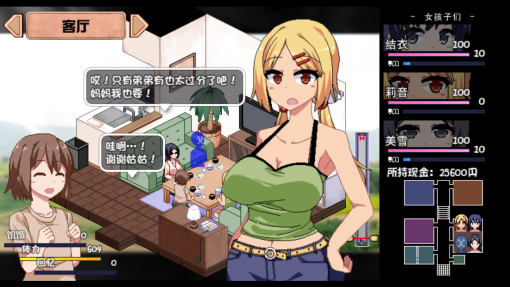
一之濑家
玄关:
- 在家里任意处点击右键可回到玄关。
- 单机大门可切换至大地图界面。
客厅:
- 结衣会在上沙发处玩手机,下沙发处学习,茶几处睡觉。
- 莉音会在上沙发处读书、看电视,茶几处睡觉。
- 美雪会在上沙发端茶站立、读书,茶几处睡觉、电话处接电话。
- 深夜时段可通过电视机学习技能。
厨房:
- 厨房可以进行洗餐具小游戏。
- 结衣会使用橱柜、冰箱。
- 莉音会使用橱柜、冰箱。
- 美雪会使用洗碗池、灶台。
卫生间
- 所有家庭成员随机使用厕所,入厕期间不可以互动。
- 学习闯入厕所技能可强行进入厕所。
更衣室
- 结衣会使用洗手池。
- 莉音会使用洗手池。
- 美雪会使用洗衣机。
- 所有家庭成员在夜晚时段随机使用浴室,洗浴期间可以加入一起洗(每天只能洗澡1次)。
夫妻的房间
- 美雪会使用化妆台。
- 美雪会在床上读书。
- 美雪会在床上睡眠。
- 美雪会在床上自娱自乐。
- 结衣、莉音不能进入本房间(3P、4P时除外)
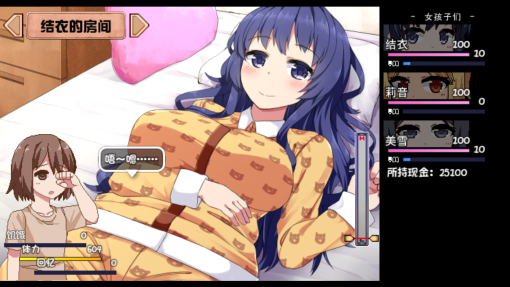
结衣的房间
- 结衣的房间可以进行算术题小游戏。
- 结衣会在书桌学习
- 结衣会使用钢琴
- 结衣会在床上睡眠。
- 结衣会在床上读书。
- 莉音会坐在地上读书。
莉音的房间
- 莉音的房间可以进行课外研究。
- 莉音会在窗边读书。
- 莉音会使用衣柜。
- 莉音会在床上睡眠。
- 莉音会在床上读书。
- 结衣会坐在床边读书。
海边
- 海滩:海滩躺椅处可以进行偷看美女。
- 海滩(钓鱼):浮木处可以钓鱼,后期出现美月。
学校
- 操场:中期出现镜。
- 体育仓库:15日后夜晚时段出现谜之商人。
河边
- 河滩:浮木处可以钓鱼,1处树可以捕虫。灯里任务完成后变为野营地。
山
- 山脚:2处树可以捕虫,中期出现凉花
- 山腰:洞穴内可消耗5金钱参拜。可以进行爬山。
粗点心店门口
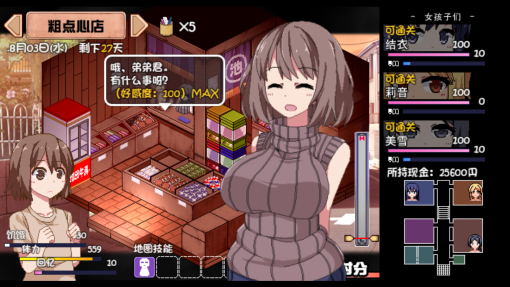
- 粗点心店:可以和雫交谈打开商店。可以花费100金钱获得扭蛋。
- 公园:可以和绵太交谈进行拍拍卡游戏。可以花费金钱在贩卖机处购买道具。可以在贩卖机处随机获得金钱。
主线任务
单人剧情
美雪
- 好感度事件
- 属性值事件
莉音
- 好感度事件
- 属性值事件
结衣
- 好感度事件
- 属性值事件
周末旅行
8月7日:烧烤
8月14日:郊游
8月21日:海水浴
8月28日:烟火大会
支线任务
雫——雫的秘密
镜——镜的特训
美月——海底财宝大作战
凉花——生态调查
灯里

其他资料
技能学习
商品列表